

In the world of industrial air compression, especially in applications like wastewater aeration, cleanroom environments, and food processing, oil-free operation is more than a preference—it’s a necessity. One of the most transformative technologies enabling this is the foil air bearing.
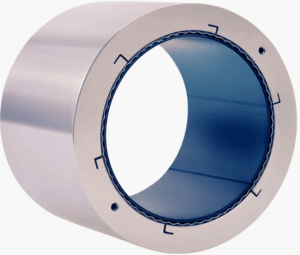
What Are Foil Air Bearings?
Foil air bearings are a type of gas bearing that support a rotating shaft using a thin film of air. Unlike traditional bearings that rely on oil lubrication and mechanical contact, foil bearings use self-generated air pressure to create a cushion between the shaft and the bearing surface.
How They Work:
Why This Means Oil-Free Operation
Because foil air bearings rely solely on ambient air for lubrication:
This makes them ideal for high-speed centrifugal compressors, which often operate at speeds above 50,000 RPM and require precise, clean, and reliable bearing systems.
Measuring Durability in Foil Air Bearing Compressors
Durability in these systems is assessed differently than in traditional compressors. Here are the key metrics and methods:
1. Start-Stop Cycles
Foil bearings are rated for hundreds of thousands of start-stop cycles. Each cycle tests the bearing’s ability to withstand contact at low speeds and transition smoothly to air-supported operation.
2. Load Capacity and Deflection
Engineers measure how well the bearing handles radial and axial loads without excessive deflection. The foil structure is designed to absorb shock and distribute pressure, enhancing longevity.
3. Thermal Stability
High-speed operation generates heat. Foil bearings are tested for thermal resilience, ensuring they maintain shape and performance under elevated temperatures.
4. Wear Testing
Although contact is minimal, startup and shutdown phases involve brief surface interaction. Materials are selected and tested for wear resistance, often using advanced coatings like PTFE or ceramics.
5. Long-Term Field Data
Manufacturers collect operational data from deployed systems to validate durability claims. Many compressors with foil bearings have logged over 10 years of continuous operation with minimal maintenance.
The Bottom Line
Foil air bearings are a game-changer for centrifugal compressors. They enable:
As industries move toward sustainable and low-maintenance solutions, foil air bearing technology stands out as a cornerstone of modern compressor design.