
As demand for efficient, low‑impact excavation grows across civil engineering, telecoms, and utilities, contractors are exploring safer ways to expose buried infrastructure. Neo Air is introducing our new battery powered air lance, nForce— a modern alternative to traditional mechanical digging and petrol‑powered air systems. Designed to deliver focused, high‑pressure airflow, these units allow site teams to remove spoil and expose utilities with remarkable precision.
With regulatory pressure increasing and utility strikes costing the UK industry more than £2.4 billion annually, innovative solutions like battery‑powered air lances are becoming essential equipment for responsible, compliant excavation.
Find out more about our solution here:
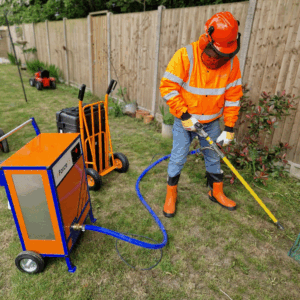
Traditional tow‑behind compressors and pneumatic tools produce noise, fumes, and emissions that can limit working hours, create health risks, and require additional site controls.
A battery-powered system delivers:
This not only improves wellbeing but also allows work to continue in densely populated areas without disturbing residents or breaching environmental guidelines.
The biggest risk in excavation is damaging unknown or inaccurately mapped assets. Air lances reduce this risk because:
This precision dramatically reduces the chances of costly utility strikes or service interruptions.
Contractors often struggle with diesel compressors that require towing, storage, transport logistics, and daily maintenance.
A battery‑powered mobile unit offers:
The result: lower operating costs, less downtime, and more productive crews.
Battery systems have fewer moving parts and require no fuel, no oil changes, and minimal servicing. Over a project’s lifespan, this significantly reduces running expenses and eliminates exposure to fluctuating fuel prices.
When paired with increasingly affordable battery charging infrastructure, the long-term value becomes even clearer.
Ground‑penetrating radar (GPR) is widely used to detect subsurface utilities, but it is not infallible. Across the UK, numerous incidents show how reliance on GPR alone can still lead to strikes. A battery‑powered air lance provides an essential layer of protection when uncertainties remain.

GPR performance can be affected by:
Even skilled surveyors can face ambiguity, especially in older urban areas where decades of undocumented works overlap.
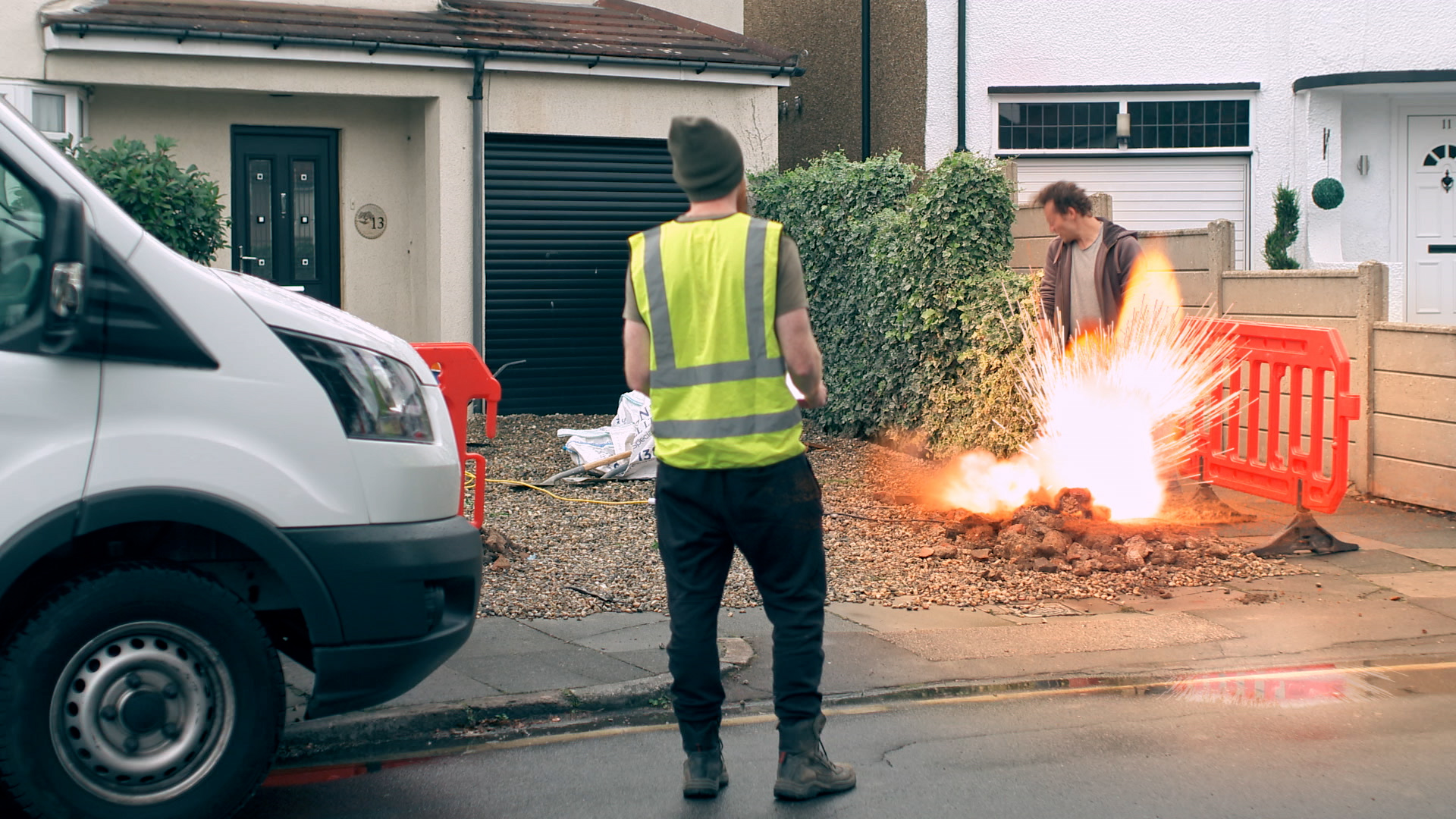
Past investigations into service strikes have shown that:
In many cases, GPR surveys were completed — but uncertainty remained due to soil conditions or complex sub-surface layouts.
A battery‑powered air lance gives crews a safe, non-destructive way to:
It acts as the final, crucial confirmation step before digging — turning uncertainty into certainty and preventing strikes that cost time, money, and safety.
As the industry continues to move toward low‑emission equipment and safer excavation standards, battery-powered air lances represent the next logical evolution. They offer the perfect combination of safety, environmental compliance, and operational efficiency, making them a valuable addition to any utility contractor’s toolkit.
Neo Air Ltd is committed to supporting this shift with modern, battery‑powered pneumatic solutions engineered for reliability, portability, and real-world utility‑exposure challenges.